


Research
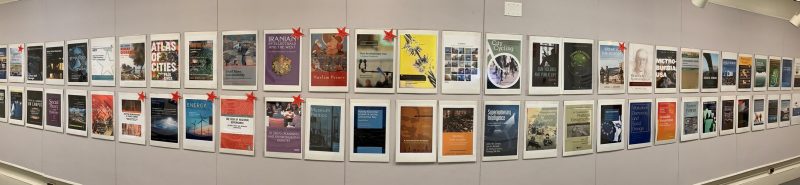
Books and research published by SPIA faculty
Solving Society's Most Pressing Challenges
SPIA researchers address complex public challenges at the intersection of governance, technology, security, sustainability, planning, and community development. Through interdisciplinary collaboration, faculty and students generate research that informs public policy, strengthens institutions, advances social innovation, and improves communities locally and globally.
Research for the Public Good
SPIA researchers address the critical challenges facing communities, governments, and organizations in an increasingly complex and interconnected world. Through interdisciplinary collaboration and partnerships across the public, private, and nonprofit sectors, faculty and students generate knowledge that informs policy, strengthens institutions, advances responsible innovation, and promotes sustainable and equitable development. From artificial intelligence and technology governance to transportation, environmental resilience, security, and community development, SPIA research creates solutions that improve lives and serve the public good.
Research Labs & Initiatives
SPIA advances impactful, interdisciplinary research through specialized laboratories and experiential learning programs that connect public policy, technology, governance, and community engagement. These initiatives provide opportunities for faculty and students to collaborate on real-world challenges while developing innovative solutions that serve the public good.
-
Redirect Item
-
Redirect ItemScience, Technology, and Engineering in Policy (STEP) , redirect
The Science, Technology, and Engineering in Policy (STEP) Program bridges technical expertise and public decision-making.
-
Redirect ItemTech for Humanity Lab , redirect
The Technology for Humanity Lab examines how innovation can improve lives, strengthen communities, and promote social well-being.
Public Interest Technology Lab
The Public Interest Technology Lab explores how emerging technologies can be designed, governed, and implemented to advance the public good. Through interdisciplinary research and collaboration, faculty and students examine issues such as artificial intelligence governance, digital policy, data ethics, civic technology, and the societal impacts of technological change.
Science, Technology, and Engineering in Policy (STEP)
The Science, Technology, and Engineering in Policy (STEP) Program bridges technical expertise and public decision-making. STEP prepares students and researchers to address complex societal challenges by integrating scientific and technological knowledge into policy development, analysis, and implementation.
Technology for Humanity Lab
The Technology for Humanity Lab examines how innovation can improve lives, strengthen communities, and promote social well-being. Researchers work across disciplines to explore responsible technology development, digital inclusion, and human-centered approaches to solving public challenges.
Featured Research



Page 1 of 250 | 2000 Results
SPIA faculty contribute to the advancement of scholarship through editorial leadership and service on academic journals and professional organizations.
- Administration & Society
- American Review of Public Administration
- Athens Journal of Social Sciences
- Congress & the Presidency
- Environmental Health Perspectives
- Europe and the World Book Series, Lexington Books
- Fast Capitalism
- Frontiers in Science & Environmental Communication
- Frontiers in Build Environment- Indoor Environments
- Housing Policy Debate
- International Journal of Sustainable Transport
- International Journal of Economics, Financial and Management Sciences
- Journal of Collaborative Healthcare and Translational Medicine
- Journal of Cycling and Micromobility Research
- Journal of Transport and Land Use
- New Political Science
- Presidential Studies Quarterly
- Review of Evolutionary Political Economy
- Rhetoric & Public Affairs
- Risk, Hazards & Crisis in Public Policy
- Urban Affairs Review
- Urban and Regional Resilience eJournal
- Sustainability
- Telos Press Publishing
- Transport Reviews
- Transportation Research Part-D
- Transportation Research Record
Mary Beth Dunkenberger, Crisis Response and Harm Reduction: Combating Opioid Overdose through Community-level Intervention, University of Baltimore, Prime Sponsor: Office of National Drug Control Policy, 2019-2020, $299,456
Mary Beth Dunkenberger, Evaluation of TAP SwiftStart Program, Total Action for Progress, Prime Sponsor: US Department of Labor, Employment and Training Administration, 2019-2020, $55,595
Mary Beth Dunkenberger, Re-Employment Support and Training for the Opioid Related Epidemic, RESTORE Grant Program (RESTORE grant program) – Third Party Evaluation, Total Action for Progress, Prime Sponsor: US Department of Labor, Employment and Training Administration, 2019-2022, $35,000
Steve Hankey, Seeing the forest for the trees: Developing Google Street View-based metrics of nature and their influence on health, Duke Clinical Research Institute, Prime Sponsor: National Institute of Health, 2019-2021, $8,100
Ariel I. Ahram, Exiting Proxy Wars in the Middle East, Carnegie Corporation of New York, 2018-2020, $400,000
Thomas Sanchez, Fairfax County Moving to Work (MTW) Evaluation, Fairfax County, 2018-2020, $100,257
Mary Beth Dunkenberger, Community Behavioral Health Expansion Evaluation, New River Valley Community Services, Prime Sponsor: Substance Abuse and Mental Health Services Administration, 2019-2020, $283,122
Kris Wernstedt, Collaborative Research: CRISP Type 2: Coordinated, Behaviorally-Aware Recovery for Transportation and Power Disruptions (CBAR-tpd), National Science Foundation, 2018-2020, $541,942
Leisha Garner LaRiviere, Commonwealth of Virginia - Virginia Management Fellows Program, Commonwealth of Virginia, Office of the Governor, 2019-2021, $350,000
Gerard Toal, Public opinion, media infosphere and geopolitical orientations in the post-Soviet space: The ‘Near Abroad’ at a key conjuncture, University of Colorado at Boulder, Prime Sponsor: National Science Foundation, 2018-2021, $117,477
Leisha Garner LaRiviere, State Agency Strategic Planning and Systems Transformation, VA Department of Behavioral Health & Developmental Services, 2018-2021, $938,768 (PL62V7WJ)
Stephanie Smith, VT Institute for Society, Culture, and Environment (ISCE), "Unpacking the Global Health Agenda: Civil Society Priorities and Their Measurement," 2020, $23,000.
Steve Hankey, CAREER: Leveraging mobile monitoring, low cost sensors, and Google Street View imagery to identify and modify street-level determinants of exposure to particulate air pollution, National Science Foundation, CAREER Award, 2020-2025, $500,000
Leisha Garner LaRiviere, Virginia Center for Behavioral Rehabilitation and Virginia Tech School of Public and International Affairs facility-specific leadership and management pathways program, VA Department of Behavioral Health & Developmental Services, 2019-2019, $25,000
Leisha Garner LaRiviere, Virginia Leadership Programs, VA Department of Behavioral Health & Developmental Services, 2019-2019, $203,500
Leisha Garner LaRiviere, Virginia Management Fellows Program, Commonwealth of Virginia, Office of the Governor, 2017-2019, $350,000
Joel Peters, 2019 Mandela Washington Fellowship for Young African Leaders, International Research and Exchange Board, Prime Sponsor: US Department of State, 2019-2019, $83,123
Brian Cook, Capital Ecosystem Development Project, Valleys Innovation Council, Prime Sponsor: Virginia Department of Housing and Community Development, 2018-2019, $27,661